
Introduction
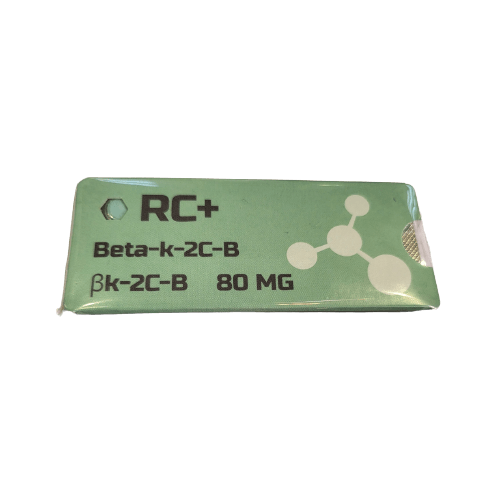
Beta-k-2C-B 80mg blister is a unit presentation of 2-amino-1-(4-bromo-2,5-dimethoxyphenyl)ethan-1-one, also written βk-2C-B or bk-2C-B. It is the beta-keto derivative of 2C-B (4-bromo-2,5-dimethoxyphenethylamine). The ring has bromine at position 4 and methoxy groups at positions 2 and 5. A ketone sits on the benzylic carbon. It is not 2C-B, which lacks that ketone, and it is not a methyl cathinone.
Richard Glennon and colleagues described it in the scientific literature in 2004. It is not an approved medicine. Each blister unit is labeled 80 mg. That number is the declared content of the unit. It is not a recommended amount for any use. The label must state whether 80 mg means free base or hydrochloride. The free base weighs 274.11 g·mol−1. The hydrochloride weighs about 310.6 g·mol−1.
Key features and benefits – Buy Beta-k-2C-B 80mg Blister
- Defined beta-keto 2C scaffold. The benzylic ketone is the structural difference from 2C-B and is visible by NMR and mass spectrometry.
- Bromine marker. Mass spectra should show an M / M+2 pair.
- Unit fill. A blister declares 80 mg per unit, which supports content checks without a separate weighing step.
- Documented identity. CAS 807631-09-0, PubChem CID 11288812, formula C10H12BrNO3.
- Laboratory-only handling. Intended for controlled chemical and in vitro work, not for formulation or human administration.
Specifications of Buy Beta-k-2C-B 80mg Blister
| Property | Detail |
|---|---|
| Product name | Beta-k-2C-B 80 mg blister |
| Chemical name | 2-Amino-1-(4-bromo-2,5-dimethoxyphenyl)ethan-1-one |
| Synonyms | βk-2C-B; bk-2C-B; beta-keto-2C-B; 4-bromo-2,5-dimethoxy-β-ketophenethylamine |
| CAS number | 807631-09-0 |
| Identifiers | PubChem CID 11288812; ChemSpider 9463799 |
| Free-base formula | C10H12BrNO3 |
| Free-base molar mass | 274.11 g·mol−1 |
| Common salt | Hydrochloride, about 310.6 g·mol−1 |
| Related parent | 2C-B, 4-bromo-2,5-dimethoxyphenethylamine |
| Labeled content | 80 mg per blister unit |
| Salt form | Must be stated. 80 mg of hydrochloride is not 80 mg of free base |
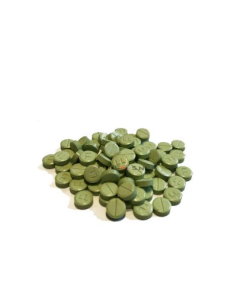
| Appearance | Solid unit in a blister; color depends on form and excipients |
| Purity | As stated on the batch COA |
| Storage | Sealed blister, cool, dry, protected from light |
| Intended use | Laboratory research only |
Applications in research
Appropriate uses are non-clinical and institutionally approved:
- Analytical reference for HPLC, LC-MS, and NMR identification of βk-2C-B.
- Content-uniformity checks on a labeled 80 mg unit.
- Forensic differentiation from 2C-B, 2C-I, and other 2,5-dimethoxyphenethylamines.
- Impurity profiling of the beta-keto phenethylamine.
Do not describe or imply oral use or any other human route. Do not treat 80 mg as a dose.
Purity and testing
A defensible product claim rests on the batch certificate, not on the blister label alone.
- HPLC for chromatographic purity and for assayed content per unit against the 80 mg label.
- 1H NMR for the two methoxy groups, the aromatic pattern, and the aminomethyl ketone. Absence of the ketone means the sample is 2C-B, not βk-2C-B.
- Mass spectrometry for the free-base molecular ion consistent with C10H12BrNO3, including the bromine isotope pair.
- Explicit statement of whether 80 mg is free-base equivalent or hydrochloride weight.
- Residual solvent and excipient data if the supplier states them.
Store the COA with the lot number. Do not use a 2C-B CAS number for this blister.
Disclaimer
For laboratory research use only. Not for human or veterinary consumption, not for diagnostic or therapeutic use, and not a food, drug, or cosmetic. The 80 mg marking is fill weight, not a dosing instruction. βk-2C-B is restricted under the German NpSG, is Schedule III in Canada, and is covered by the Psychoactive Substances Act in the United Kingdom. It is illegal in Sweden and Switzerland. 2C-B is a Schedule I substance in the United States, and analogue rules may apply. Buyers are responsible for confirming legality, licensing, import rules, and institutional approval before ordering or handling. Handle with standard laboratory PPE and dispose of waste under local hazardous-chemical rules. No statement on this page is a claim of safety, efficacy, or fitness for any human application.
Frequently asked questions
What is βk-2C-B?
It is 2-amino-1-(4-bromo-2,5-dimethoxyphenyl)ethan-1-one, the beta-keto derivative of 2C-B. The free base is C10H12BrNO3.
What does 80 mg on the blister mean?
It is the labeled amount in each unit. It is not a recommended dose. The COA must say whether that 80 mg is free base or hydrochloride.
Is this the same as 2C-B?
No. 2C-B lacks the benzylic ketone. βk-2C-B is CAS 807631-09-0 and weighs 274.11 g·mol−1 as the free base. They must be identified separately.
Which CAS number applies?
CAS 807631-09-0 for the free base. A hydrochloride needs its own identification on the COA.
How should the blister be stored?
Sealed, cool, dry, and protected from light. Keep the lot number with the COA.
Can it be used in humans?
No. It is not approved as a medicine and is not sold for consumption. Legal status varies; check local law before purchase.
What analytical methods confirm identity?
HPLC assay against the 80 mg label, NMR for the dimethoxy and ketone signals, and mass spectrometry consistent with C10H12BrNO3, including the bromine isotope pair. The COA should state salt form so the labeled mass is not read as free-base content.
Be the first to review “Beta-k-2C-B βk-2C-B 80mg Blister”
Related products
2C-D
3-MMC
2C-C
2C-B-FLY
Reviews
There are no reviews yet.