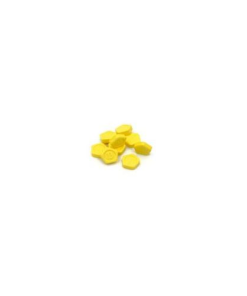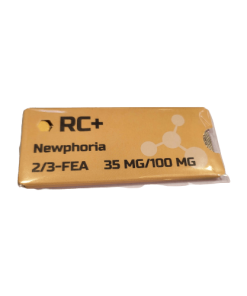
2-FEA is N-ethyl-1-(2-fluorophenyl)propan-2-amine (2-fluoroethamphetamine). The content below is written for a research-chemical category page covering 2-FEA materials. It does not include dosing, administration, or human-use claims. Each product requires its own lot-specific COA confirming identity, salt form, stereochemistry, and assay.
Introduction
2-FEA is N-ethyl-1-(2-fluorophenyl)propan-2-amine. It is an N-ethyl, ring-substituted amphetamine. A fluorine atom sits at the ortho (2-) position of the phenyl ring, and an ethyl group is attached to the amine nitrogen. It is the N-ethyl analogue of 2-FA, which has a primary amine, and it is the ortho-fluoro isomer of 3-FEA and 4-FEA. The alpha carbon is a stereocenter.
It is not an approved medicine. The free base is C₁₁H₁₆FN, 181.25 g·mol⁻¹, commonly associated with CAS 3823-29-8. The hydrochloride is C₁₁H₁₇ClFN, 217.7 g·mol⁻¹, CAS 3871-89-4. Products in this category (powder, pellets, or other forms) must state free base versus hydrochloride and racemate versus named enantiomer on the label and COA. A category name does not confirm the salt or stereochemistry of any individual lot.
Key Features & Benefits
- Defined N-ethyl ortho-fluoro amphetamine. The N-ethyl and 2-fluoro substitution are the structural markers that distinguish it from 2-FA and from the meta and para N-ethyl isomers.
- Documented identity: free-base formula C₁₁H₁₆FN; hydrochloride CAS 3871-89-4.
- Fluorine marker. ¹⁹F NMR can confirm the ortho-fluoro pattern.
- Distinct from 2-FA. That compound has a primary amine and a lower mass (free-base CAS 1716-60-5, C₉H₁₂FN, 153.20 g·mol⁻¹).
- Suitable for controlled laboratory and forensic analytical work when legally authorized. Not for formulation or human administration.
Specifications Table
| Property | Detail |
|---|---|
| Product category | 2-FEA |
| Chemical name | N-Ethyl-1-(2-fluorophenyl)propan-2-amine |
| Synonyms | 2-FEA; 2-fluoroethamphetamine; o-fluoroethamphetamine |
| Free-base CAS | 3823-29-8 (commonly cited) |
| Hydrochloride CAS | 3871-89-4 |
| Free-base formula / mass | C₁₁H₁₆FN / 181.25 g·mol⁻¹ |
| Hydrochloride formula / mass | C₁₁H₁₇ClFN / 217.7 g·mol⁻¹ |
| Related compounds | 2-FA (primary amine analogue); 3-FEA and 4-FEA (positional isomers) |
| Stereochemistry | Racemate or named enantiomer must be stated |
| Salt form | Free base or named salt must be stated |
| Available forms | Powder, pellets, or other solids (content as stated on lot COA) |
| Appearance | As stated on the individual COA |
| Purity | As stated on the batch COA for each product |
| Storage | Tightly closed container, cool, dry, protected from light, under applicable controlled-substance rules |
| Intended use | Laboratory research only, where legally authorized |
Applications in Research
Appropriate uses are non-clinical, institutionally approved, and legally authorized:
- Analytical reference material for HPLC, LC-MS, and NMR identification of 2-FEA against a certified standard.
- Forensic differentiation from 2-FA and from the 3-FEA and 4-FEA isomers.
- Comparison of free-base versus hydrochloride lots and of racemic versus enantiomerically enriched material.
- In vitro monoamine-transporter assays where the protocol specifically covers this compound.
Do not describe or imply oral, insufflation, injection, or any other human route of administration. Do not treat any labeled milligram quantity as a dose.
Purity & Testing
A defensible product claim rests on the batch certificate of analysis for the specific form.
- HPLC for chromatographic purity, with retention that separates the 2-fluoro N-ethyl isomer from the 3-fluoro and 4-fluoro isomers and from 2-FA.
- ¹H NMR and/or ¹⁹F NMR confirming the ortho-fluoro aromatic pattern and the N-ethyl group. A primary amine signal indicates 2-FA; a meta or para pattern indicates a different isomer.
- Mass spectrometry consistent with the free-base molecular ion of C₁₁H₁₆FN.
- Explicit statement of free base or named salt and of stereochemistry (racemate or named enantiomer).
- Residual solvent and related-substance limits if stated by the supplier.
Store the COA with the lot number. Do not use a 2-FA or other FEA isomer CAS number for a 2-FEA lot.
Disclaimer
For laboratory research use only, where legally authorized. Not for human or veterinary consumption, not for diagnostic or therapeutic use, and not a food, drug, or cosmetic. 2-FEA is controlled or restricted as an amphetamine analogue or under the German NpSG in many jurisdictions. Amphetamine is a controlled substance, and analogue rules may apply. Unauthorized possession, manufacture, distribution, or importation can be a criminal offense. Buyers are solely responsible for confirming legality, licensing, import rules, and institutional approval before ordering or handling any specific product. Handle under applicable controlled-substance and hazardous-chemical rules and dispose of waste according to local regulations. No statement on this page is a claim of safety, efficacy, or fitness for any human application. The category name does not replace lot-specific identity and purity data on the COA.
Frequently Asked Questions
What is 2-FEA?
It is N-ethyl-1-(2-fluorophenyl)propan-2-amine, also called 2-fluoroethamphetamine. The free base is C₁₁H₁₆FN, 181.25 g·mol⁻¹.
Is the product the free base?
Not unless the COA says so. The hydrochloride is CAS 3871-89-4 and weighs 217.7 g·mol⁻¹. The COA must state the form.
Is this the same as 2-FA or the other FEA isomers?
No. 2-FA has a primary amine (free-base CAS 1716-60-5). 3-FEA and 4-FEA have the fluorine at different ring positions. 2-FEA is the N-ethyl ortho-fluoro compound, hydrochloride CAS 3871-89-4. Mass alone does not separate the fluoro isomers.
Which CAS number applies?
CAS 3871-89-4 for the hydrochloride. Free-base CAS 3823-29-8 is commonly cited. Use the number that matches the form on the COA and confirm stereochemistry.
What purity is supplied?
Only the value stated on the specific lot COA, together with the analytical method. The method should resolve 2-FEA from related isomers.
How should it be stored?
Sealed, cool, dry, and protected from light under the rules that apply. Keep the lot number with the COA.
Can it be used in humans?
No. It is not an approved medicine and is not sold for consumption. Check local law before purchase or handling.
What analytical methods confirm identity?
HPLC with isomer resolution, NMR (including ¹⁹F) for the ortho-fluoro and N-ethyl pattern, and mass spectrometry consistent with C₁₁H₁₆FN. A primary amine signal means the sample is not 2-FEA. A meta or para aromatic pattern means it is not 2-FEA. The COA should state free base or salt and stereochemistry.
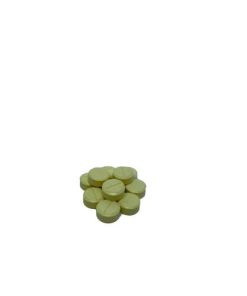
2-FEA